
Sectors
Security that matches the sector, not a generic template.
SME organizations often ask similar questions, but rarely share the same risk profile. Norvault translates compliance, vCISO direction and technical validation into concrete output per sector.
Jump to sector
Recognize your pressure point and jump to the right approach.

ContextSecurity questions from banks, investors and enterprise clients
Fintechs
Compliance, client trust and scalability without stopping product teams.
Fintechs operate under pressure from clients, partners, auditors and regulators. Security must be demonstrable while still fitting cloud delivery, product development and commercial momentum.
The challenge
Cloud and third-party risks scattered across teams and tools
Our approach
Critical processes, client data and third parties are scoped clearly
Concrete output
- Risk register connected to critical processes and suppliers
- ISO 27001 gap assessment and implementation roadmap
- Management reporting for leadership, board or investors

ContextEnterprise clients ask for policies, pentest results and audit evidence
SaaS
Security as a sales accelerator without breaking the engineering flow.
SaaS companies often receive security questions exactly when deals become larger. ISO 27001, penetration testing and client portals need evidence without a heavy internal security layer.
The challenge
Security controls must fit existing delivery processes
Our approach
Security requirements are translated into existing product and engineering processes
Concrete output
- Security evidence pack for sales and customer success
- Application and cloud security roadmap
- Pentest priorities with management context

ContextCritical production processes depend on IT, OT and external suppliers
Manufacturing
Security around production, suppliers and critical processes that need to keep running.
In manufacturing, security directly affects continuity. IT, OT, suppliers and production planning come together while budgets and capacity are often constrained.
The challenge
Legacy systems and pragmatic workflows make standard policies difficult
Our approach
Business critical processes and dependencies are made visible
Concrete output
- Overview of critical processes, systems and suppliers
- Pragmatic risk register with operational impact
- Roadmap for IT/OT governance and incident preparation

ContextAvailability and continuity matter more than paper compliance
Energy
Cybersecurity for organizations where availability, supply chain dependencies and oversight meet.
Energy companies and suppliers operate in an environment where disruption can have direct impact. Governance, crisis preparation and supplier risks need to be demonstrably under control.
The challenge
Suppliers, remote access and OT connections increase the risk profile
Our approach
Critical services and dependencies are connected to threats and impact
Concrete output
- Cybersecurity roadmap for critical services
- Supplier and remote-access risk assessment
- Crisis plan and escalation structure

ContextMany dependencies between planning, logistics, suppliers and operational systems
Maritime sector
Security for ports, shipping and maritime service providers with many dependencies.
The maritime sector runs on planning, chains, suppliers and operational systems. Cybersecurity needs to match continuity, international collaboration and practical decision-making.
The challenge
International clients and partners ask for demonstrable security maturity
Our approach
Critical process chains are mapped from office to operations
Concrete output
- Process and dependency map for critical maritime services
- Crisis and continuity roadmap
- Supplier assessments and security agreements
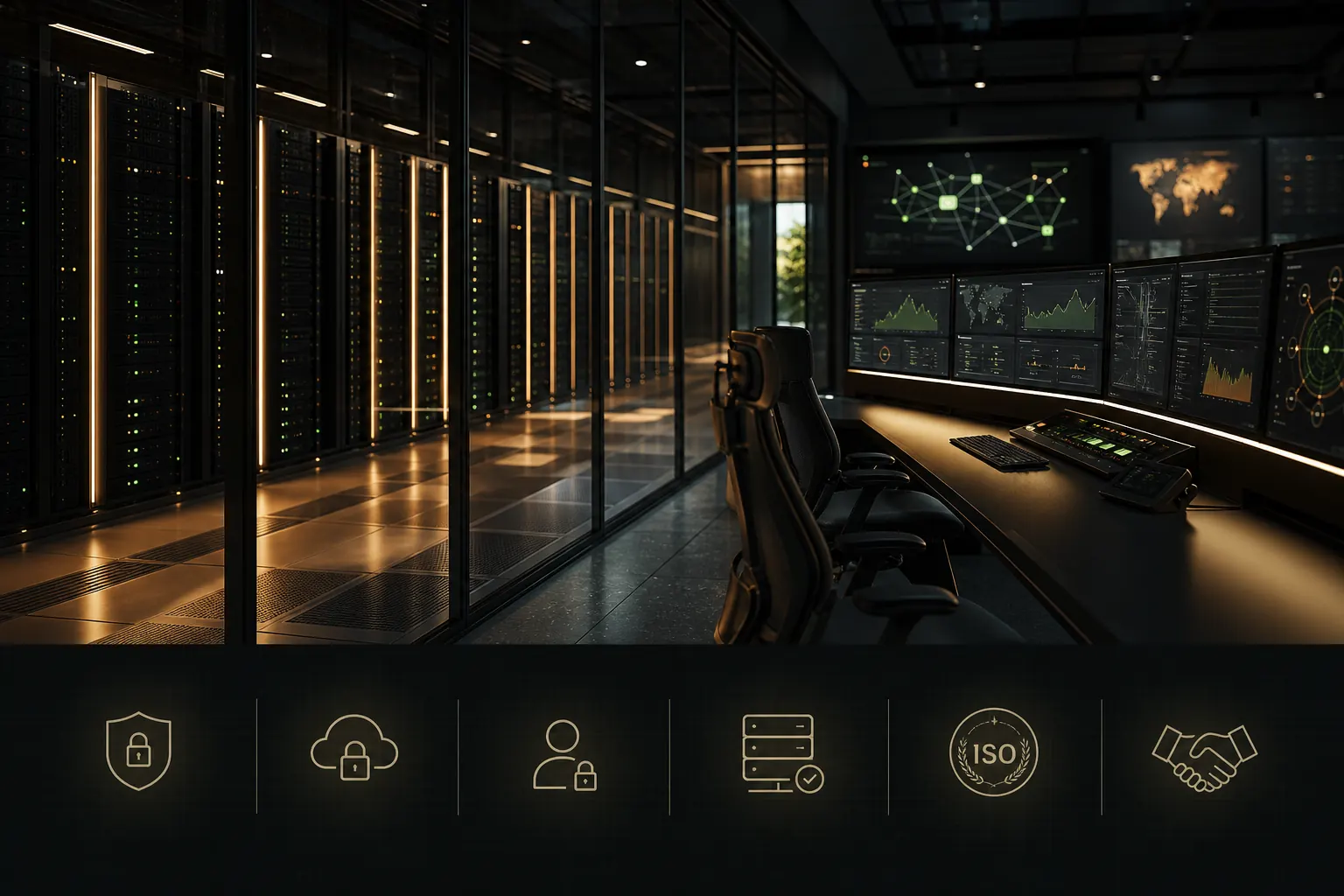
ContextAdmin access, client environments and remote access are attractive targets
MSPs & hosting providers
Security as the basis for client trust, scalable services and audit pressure.
MSPs and hosting providers carry responsibility for client environments, access, management processes and continuity. Security quickly becomes both a commercial and operational issue.
The challenge
Clients increasingly ask for ISO 27001, pentests and security processes
Our approach
Management processes, access control and client responsibilities are clearly defined
Concrete output
- Security baseline for client management and remote access
- ISO 27001 roadmap for managed services
- Supplier and client responsibility matrix
From sector to approach
See which service fits your situation.
The sector approach clarifies the context. The services overview shows the scope, application and concrete output for each service.
FAQ
Frequently asked questions about sectors.
Which sectors does Norvault Security support?
Norvault Security supports fintechs, SaaS companies, manufacturing, energy, maritime organizations and MSPs/hosting providers.
Why use a sector-specific approach?
Risks, client questions, compliance pressure and critical processes differ per sector. A sector-specific approach makes output more concrete and usable.
Which services often apply per sector?
vCISO, ISO 27001, ISMS management, NIS2 and the Dutch Cybersecurity Act, security assessments, awareness and pentesting often appear in different combinations.
Your Security Ally
Make security sector-specific and executable.
A short email quickly clarifies which risks, compliance requirements and concrete output make the biggest difference.